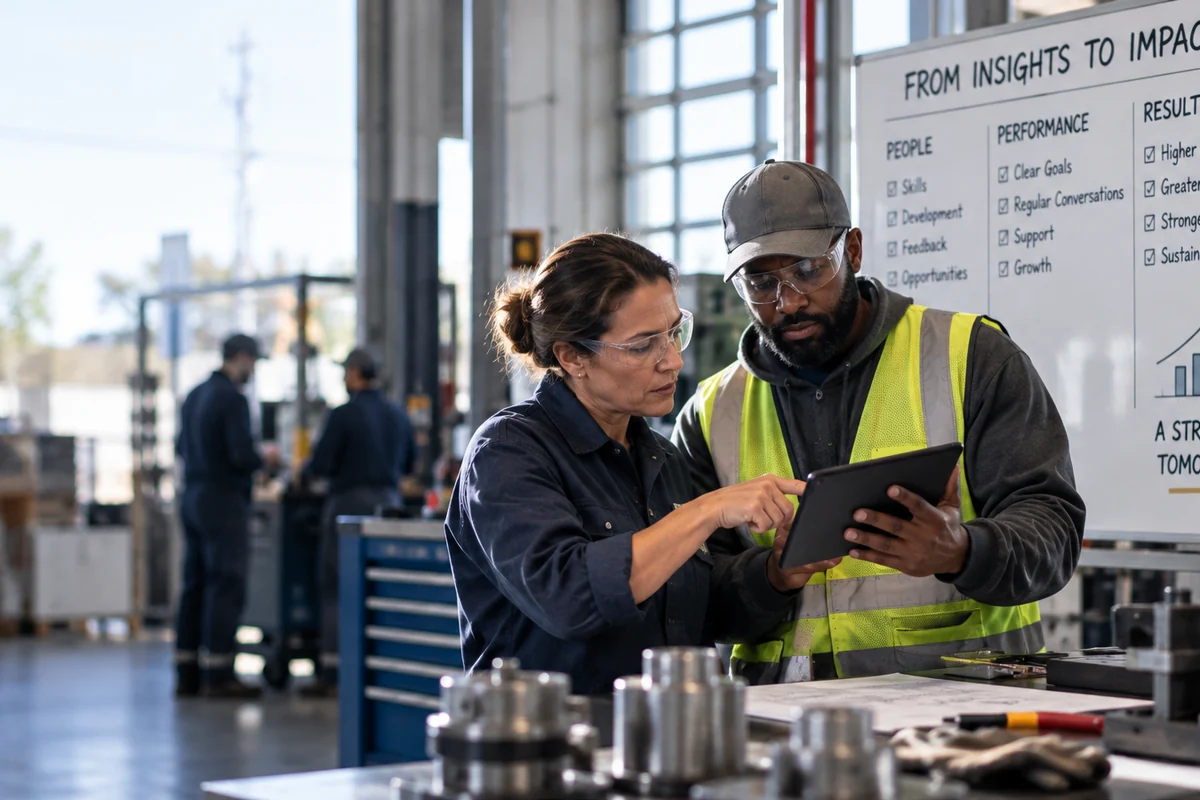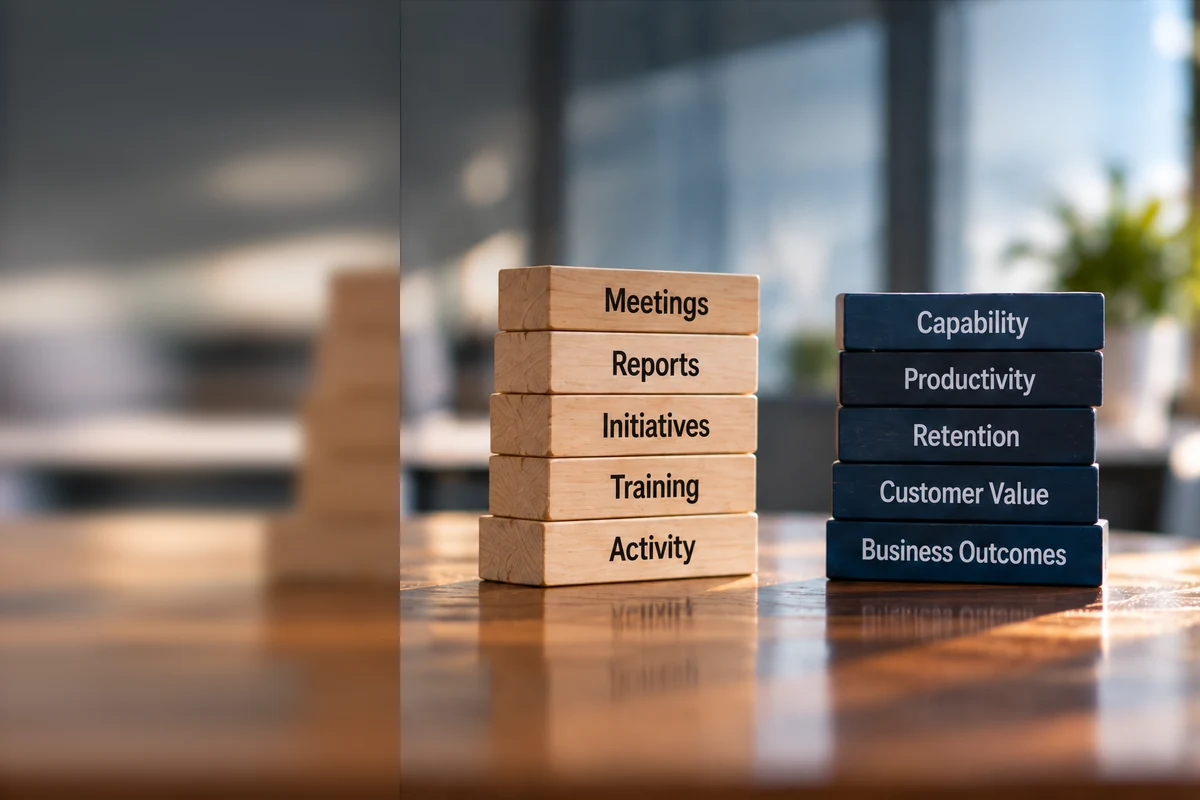

Performance conversations occur every day in organizations around the world. Managers discuss priorities before projects begin, recognize exceptional work after milestones are achieved, coach employees through difficult challenges, address performance concerns, explore career aspirations, and conduct formal performance reviews intended to evaluate progress over time. Some conversations last only a few minutes. Others occur during scheduled one-on-one meetings or annual review discussions. Collectively, these conversations represent one of the most influential leadership activities within any organization because they shape how employees understand expectations, develop capability, and improve performance.
Organizations have invested considerable effort helping managers conduct these conversations more effectively. Leaders receive training on giving feedback, asking better questions, coaching employees, and navigating difficult discussions. Performance management systems increasingly emphasize continuous dialogue rather than isolated annual reviews, recognizing that frequent communication supports stronger relationships and more timely performance improvement. These investments have improved many aspects of leadership and employee development.
Yet an important question often remains unanswered: What should a successful performance conversation actually accomplish?
Many organizations answer that question by focusing on the quality of the discussion itself. Was the feedback constructive? Were performance expectations reviewed? Were accomplishments recognized? Was the required documentation completed? These elements are important because they contribute to a productive conversation. They do not necessarily determine whether the conversation improved future performance.
Performance conversations are frequently evaluated by what was discussed rather than by what changed because the discussion occurred. A manager and employee may have an open, respectful, and well-structured conversation, yet several weeks later little has changed. Expectations remain unclear. Performance challenges continue. Development has not occurred. Priorities remain inconsistent. The conversation was successful as an event, but it produced little measurable improvement in the conditions that influence future performance.
A more useful standard is to judge the conversation by what it makes possible afterward. Therefore, the purpose of a performance conversation is not simply to evaluate past performance. It is to improve the conditions for future performance. That distinction changes both how leaders prepare and how organizations should evaluate the conversation. Employees should leave with greater clarity about expectations, a deeper understanding of what influenced performance, stronger capability to improve, and clearer commitment to what comes next. Managers should leave with better evidence about the support, coaching, resources, or organizational conditions that may be affecting performance.
Performance conversations can therefore create value in two directions at once. They can improve the individual's understanding of how to perform more effectively while also improving the organization's understanding of the conditions influencing that performance. The conversation becomes more than an exchange of feedback; it becomes a point where performance evidence can inform both individual development and organizational learning.
When performance conversations consistently strengthen clarity, learning, capability, and commitment, they become one of the mechanisms through which leaders convert performance evidence into better future execution.
Performance Conversations Should Create More Than Feedback
If the purpose of a performance conversation is to improve future performance, then the quality of the conversation cannot be evaluated solely by what was discussed. A productive discussion, thoughtful feedback, or an accurately completed performance review may create a positive leadership experience, but none of these outcomes necessarily indicate that performance will improve. The more important question is whether the conversation produced something that did not exist before it began. This distinction changes how leaders think about performance conversations.
Many managers enter these discussions believing their responsibility is to explain performance. They review accomplishments, discuss missed expectations, recognize successes, identify opportunities for improvement, and document key observations. These activities remain essential because employees deserve honest, evidence-based feedback about their performance. Feedback, however, should never become the final objective of the conversation.
Feedback creates value when it changes what someone understands, can do, or will do next. Four outcomes provide a useful test of whether a performance conversation is improving the conditions for future performance: clarity, learning, capability, and commitment. Together, they distinguish a conversation that primarily evaluates the past from one that also improves what happens next.
The first condition is clarity. Employees should leave every performance conversation with a stronger understanding of what success looks like. They should understand organizational priorities, expected outcomes, performance standards, decision boundaries, and how their work contributes to broader organizational objectives. Many performance challenges begin not with insufficient effort but with inconsistent expectations. A conversation that increases clarity immediately reduces uncertainty and enables better decision making long after the meeting has ended.
The second condition is learning. Performance conversations should help employees understand not only what happened, but why it happened. Effective leaders explore the decisions, assumptions, obstacles, and behaviors that influenced performance rather than simply evaluating results. This moves the conversation from evaluation toward understanding. Employees gain insight into how their actions influenced outcomes, while managers gain a deeper appreciation for the organizational conditions shaping performance. Learning therefore becomes a shared responsibility rather than a one-sided assessment.
The third condition is capability. Understanding a performance challenge does not automatically equip someone to perform differently in the future. Employees may need practical opportunities to strengthen knowledge, skills, confidence, and readiness to perform under different conditions. Effective performance conversations therefore extend beyond identifying development needs. They connect insight to specific actions, experiences, coaching, resources, and support that make improvement more likely.
The fourth condition is commitment. Performance improvement ultimately depends upon an employee's willingness to act on the conversation. Commitment develops when employees believe expectations are fair, feedback is constructive, development is supported, and success is genuinely achievable. Leaders strengthen commitment by involving employees in identifying solutions, agreeing upon future actions, and establishing shared ownership for improvement. Rather than leaving the conversation feeling evaluated, employees leave feeling invested in what comes next.
These four conditions reinforce one another. Greater clarity strengthens learning because employees understand what they are trying to achieve. Learning strengthens capability by identifying what must improve. Capability increases confidence that improvement is possible. Commitment provides the motivation to apply that capability consistently over time. Together, they create a conversation that influences performance long after the meeting concludes.
This changes the standard for a successful performance conversation.
The more important question is: "Did the conversation strengthen the conditions that make better performance more likely?"
That distinction moves performance conversations beyond administrative completion and toward their real leadership value: improving the conditions under which future performance occurs.
What Great Organizations Do Differently
Great organizations do not judge performance conversations primarily by whether managers completed the process correctly. They recognize that active listening, thoughtful questioning, evidence-based feedback, and documentation matter, but those practices are valuable because of what they enable. The stronger standard is whether the conversation leaves the employee and manager better positioned to improve future performance. That standard changes how leaders prepare.
Instead of preparing only around the feedback they need to deliver, stronger leaders begin with a different question: What does this employee need to leave this conversation with that they do not have today?
That question shifts attention from delivering information toward creating a useful change in clarity, understanding, capability, or commitment. Sometimes the answer is greater clarity. The employee may understand their responsibilities but remain uncertain about shifting priorities, changing expectations, or how success will be evaluated. Rather than simply reviewing completed work, effective leaders help employees understand what matters most moving forward. They reduce ambiguity because they recognize that uncertainty is one of the greatest barriers to consistent performance.
Stronger leaders also use the conversation to create learning. Rather than simply telling employees what they should have done differently, they examine how decisions were made, what assumptions influenced action, what obstacles affected execution, and what insights can be carried forward. The objective is not merely to explain performance but to improve future decision quality and understanding.
Great organizations also recognize that awareness without capability produces frustration. Employees frequently leave performance conversations understanding exactly what needs to improve while remaining uncertain about how to improve it. High-performing leaders close that gap. They connect feedback to specific developmental experiences, coaching opportunities, stretch assignments, mentoring relationships, and practical actions that build capability over time. The conversation therefore extends beyond evaluation and becomes the beginning of a structured improvement process.
Commitment matters as well. Commitment develops when employees believe improvement is both expected and achievable. This requires more than encouragement. It requires shared ownership. Rather than ending conversations with a list of managerial expectations, high-performing leaders involve employees in identifying solutions, defining next steps, and agreeing upon meaningful actions. Employees become active participants in their own development rather than passive recipients of feedback. As ownership increases, so does commitment to sustained improvement.
The strongest systems also treat performance conversations as a source of organizational evidence. Employees often possess information about unclear priorities, inefficient processes, competing demands, unnecessary bureaucracy, or operational barriers that senior leaders cannot observe directly. A recurring pattern across performance conversations can therefore reveal something about the organization as well as the individual. The question is not only, "What did I learn about this employee?" but also, "What did these conversations teach us about the conditions in which people are being asked to perform?"
The strongest performance conversations are collaborative discussions that strengthen understanding, build capability, and clarify what should happen next. When organizations also learn from recurring patterns across those conversations, the value extends beyond individual development into improvement of the performance environment itself. Great organizations therefore treat performance conversations as part of the performance system, not as isolated management events.
Performance conversations should be evaluated by what they consistently produce across the organization, not only by the quality of individual discussions. Executive teams should examine whether those conversations are improving future performance, strengthening leadership capability, and revealing conditions that require attention elsewhere in the system.
1. What should employees consistently leave our performance conversations with?
Every meaningful performance conversation should create something that did not exist before the discussion began. Employees should leave with greater clarity about expectations, deeper learning about their performance, stronger capability to improve, and renewed commitment to future success. If conversations consistently end with completed documentation but little measurable change in these conditions, the organization may be evaluating performance more effectively than it is improving it.
2. Are our managers delivering feedback, or are they improving the conditions for future performance?
Feedback is valuable, but feedback alone is not the objective. Leaders should examine whether conversations clarify priorities, improve understanding, strengthen capability, and create credible next actions. A successful conversation is measured not only by what was communicated but by what becomes possible afterward.
3. What are our performance conversations teaching us about the organization?
Every performance discussion provides valuable information beyond the employee's performance. Managers learn where expectations remain unclear, where organizational barriers exist, where leadership support is insufficient, where work design creates unnecessary friction, and where capability development should be strengthened. Executive teams should ask whether this organizational learning is being captured and used to improve the broader system or whether it disappears once the conversation ends.
4. Are we separating individual performance issues from organizational conditions?
Not every performance problem originates with the individual. Unclear priorities, conflicting demands, weak role design, insufficient resources, poor decision rights, or operating friction can all affect results. Managers should still hold employees accountable for contribution, but organizations should also look for recurring evidence that the performance environment itself requires attention.
5. If we observed every performance conversation occurring in our organization over the next six months, what organizational conditions would become stronger?
This question shifts executive attention from individual conversations to organizational capability. Would employees gain greater clarity? Would leadership capability improve? Would accountability become more consistent? Would organizational learning accelerate? Would commitment to performance increase? The answers reveal whether performance conversations are functioning as strategic leadership tools or simply fulfilling administrative requirements.
Taken together, these questions shift attention from conversation quality alone toward what the conversation changes. The objective is not simply better communication. It is better performance, stronger capability, and better evidence about the conditions in which performance occurs.
Performance conversations matter because they sit at the point where performance evidence becomes future expectation. They can clarify what success requires, surface what affected the result, identify what capability must develop, and establish what the employee and manager will do next. Their value therefore extends beyond the accuracy of the assessment or the quality of the feedback.
The conversation still has to confront the past accurately. Avoiding difficult evidence, softening meaningful performance differences, or turning every discussion into coaching would weaken the process rather than improve it. But evaluation is only one function of the conversation.
The larger purpose is to convert that evidence into better conditions for future performance. That means employees should leave with clearer expectations, better understanding of what influenced performance, appropriate development or support, and credible next actions. Managers should leave with a more precise view of what belongs to the employee, what belongs to leadership, and what may belong to the broader performance environment.
The purpose of a performance conversation is not simply to explain yesterday. It is to use what yesterday reveals to create the clarity, learning, capability, and commitment that make stronger performance more likely tomorrow.
Supporting Research
- Aguinis, H. (2019). Performance management (4th ed.). Chicago Business Press.
- DeNisi, A., & Murphy, K. R. (2017). Performance appraisal and performance management: One hundred years of progress? Journal of Applied Psychology, 102(3), 421–433.
- Kluger, A. N., & DeNisi, A. (1996). The effects of feedback interventions on performance: A historical review, a meta-analysis, and a preliminary feedback intervention theory. Psychological Bulletin, 119(2), 254–284.
- London, M. (2003). Job feedback: Giving, seeking, and using feedback for performance improvement (2nd ed.). Lawrence Erlbaum Associates.
- Pulakos, E. D. (2009). Performance management: A new approach for driving business results. Wiley.
- Smither, J. W., & London, M. (2009). Performance management: Putting research into action. Jossey-Bass.