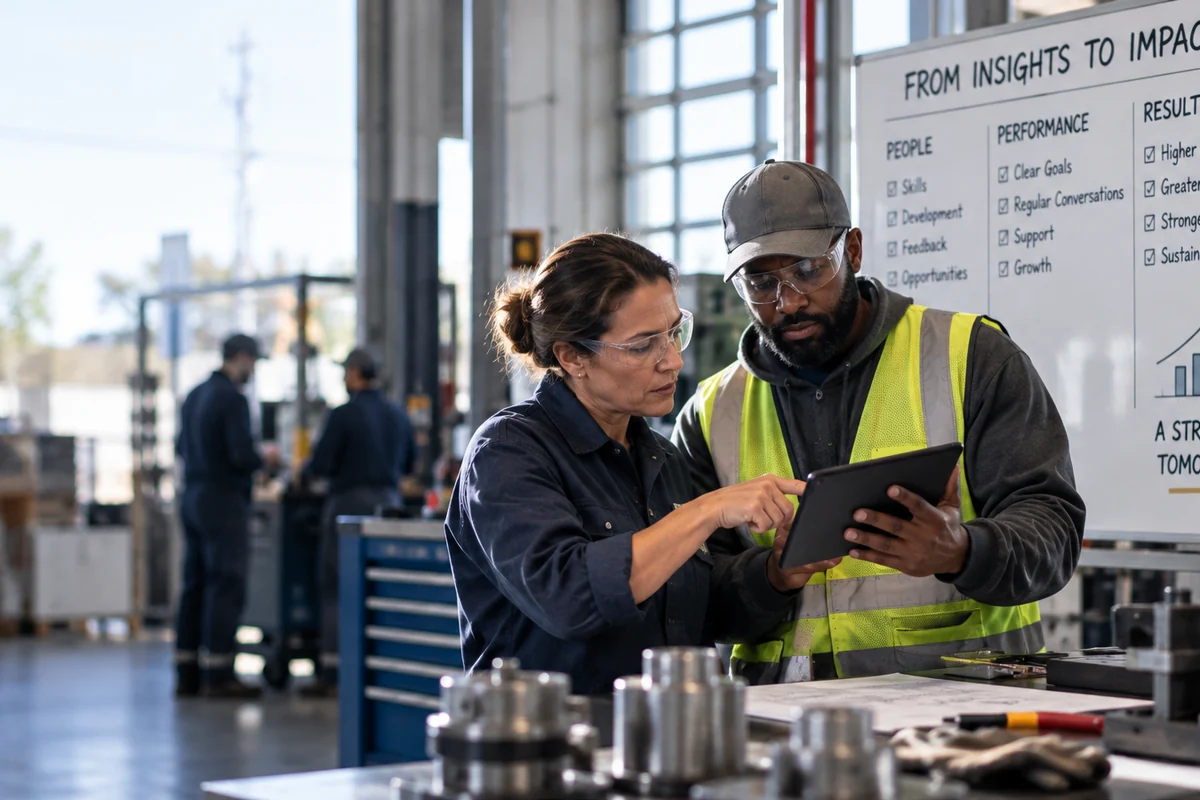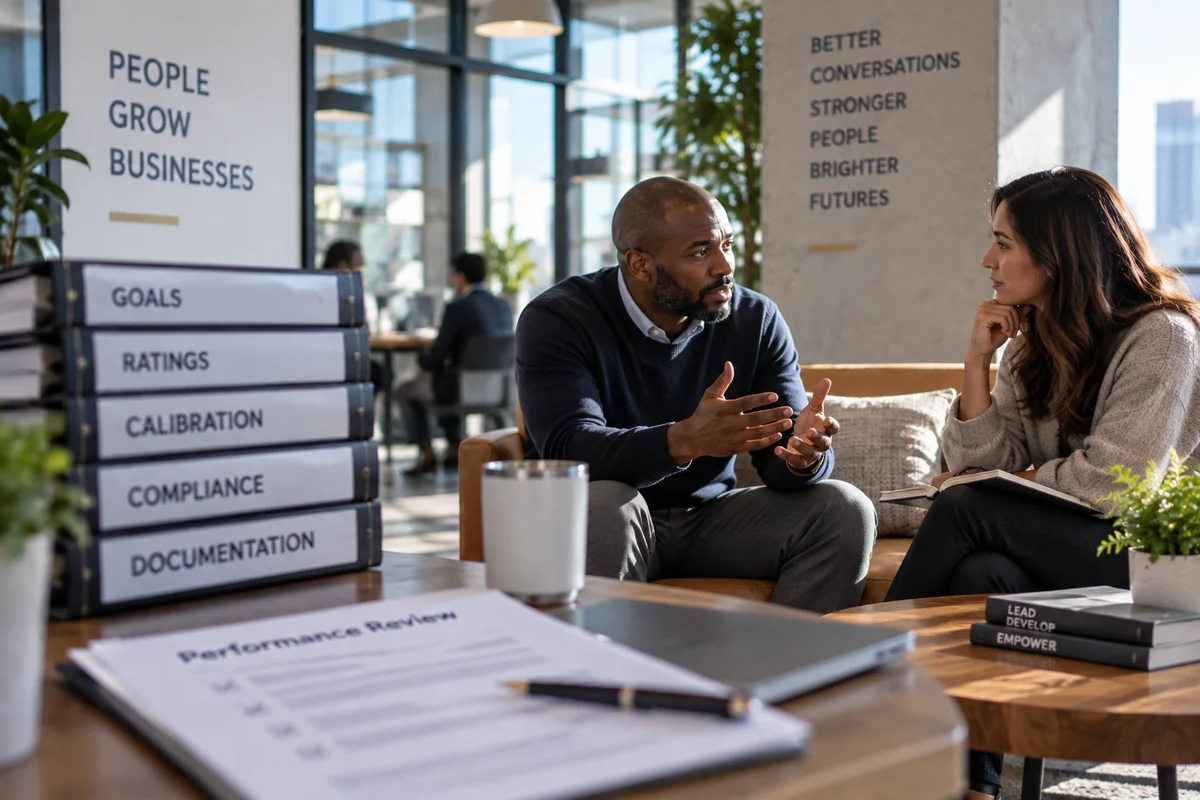

Performance has always been one of the most visible indicators of organizational success. Executive teams establish ambitious objectives, managers set performance expectations, employees are evaluated against measurable goals, and organizations invest significant resources in improving the processes used to monitor, discuss, and develop performance. Over the past several decades, performance management has evolved beyond annual reviews toward continuous feedback, coaching, goal alignment, and more frequent conversations intended to improve both individual and organizational results.
These changes reflect an important evolution in leadership thinking. Effective performance management can strengthen goal clarity, reinforce accountability, improve communication between managers and employees, and create better conditions for current performance. Few executive leaders would question the importance of managing performance well. Yet organizations face a different challenge that performance management cannot solve by itself: building the capabilities required for a future in which technologies, customer expectations, business models, and the nature of work continue to change.
The distinction matters because organizations can easily assume that improving performance management will naturally build organizational capability. Performance management and capability building are related, but they serve different purposes. Performance management helps individuals and teams understand and deliver against current expectations through objectives, feedback, coaching, accountability, and performance improvement. Capability building expands what individuals, teams, and the organization will be able to accomplish under future conditions.
Capability develops through learning, increasingly complex work, deliberate practice, knowledge transfer, leadership development, experimentation, reflection, and organizational systems that allow people to apply and extend what they know. Performance management asks whether people are successfully meeting today's expectations. Capability building asks what the organization will be capable of accomplishing tomorrow because of the experiences, investments, and operating conditions it creates today.
Leaders therefore do not need to choose between managing performance and building capability. They need to understand the relationship without treating the two as interchangeable. Performance management strengthens execution against today's requirements. Capability building expands the organization's capacity to meet requirements that may not yet exist. Sustainable performance depends on doing both deliberately.
Managing Performance Is Not the Same as Building Capability
Performance management has become one of the most familiar leadership disciplines in modern organizations. Managers establish goals, monitor progress, provide feedback, recognize achievement, address performance concerns, and evaluate results against established expectations. When practiced effectively, performance management creates clarity, strengthens accountability, and helps individuals understand what successful performance looks like within their current roles. These outcomes are necessary because organizations cannot consistently execute strategy without people who understand expectations and deliver meaningful results.
Performance management, however, should not be expected to accomplish everything an organization needs from development. Performance describes how effectively an individual, team, or organization meets expectations under current conditions. It answers questions about whether objectives are being achieved, quality standards are being met, results are improving, and commitments are being fulfilled. Capability asks a different set of questions: what new problems can this person or team solve, how effectively can the organization adapt to unfamiliar conditions, and what knowledge, judgment, relationships, and experience are being developed that will strengthen future performance?
Current performance and future capability can diverge. An employee may consistently achieve every objective in a familiar role while developing relatively little additional capacity to assume broader responsibility, solve more complex problems, or adapt to changing organizational needs. Conversely, an employee taking on a difficult stretch assignment may experience temporary unevenness while developing judgment and experience that substantially increase future contribution. Immediate performance metrics do not always capture the long-term value created through development.
The distinction becomes even more consequential at the organizational level. An organization can report strong quarterly performance while underinvesting in the capabilities that will determine future competitiveness. Financial results may improve while leadership pipelines weaken, critical knowledge remains concentrated, emerging technologies receive limited attention, or organizational learning slows because immediate performance pressure consistently outweighs development. Current performance can therefore look healthy even as future capability becomes more fragile.
This is why leaders should interpret performance as an important outcome without treating it as the complete measure of organizational strength. Every significant coaching conversation, developmental assignment, project, leadership opportunity, and performance discussion creates an opportunity to ask two questions: did we achieve the required result, and what capability did we build while achieving it? Organizations that ask only the first question can improve execution. Organizations that consistently ask both are better positioned to improve execution while expanding future capacity.
Capability Is Built Through Experience, Not Evaluation
One of the unintended consequences of modern performance management is that organizations often become exceptionally good at evaluating performance while investing far less intentionally in developing capability. Performance conversations increasingly revolve around goals, ratings, competency assessments, calibration sessions, and year-end evaluations. These practices provide leaders with valuable information about current contribution and help reinforce accountability across the organization. They answer important questions about whether expectations are being met, where coaching is needed, and how individual performance compares against established standards. What they cannot accomplish by themselves, however, is expanding what individuals and organizations will be capable of achieving in the future.
This distinction becomes clearer when viewed through the lens of organizational learning. Decades of research consistently demonstrate that capability is developed through experience, deliberate practice, meaningful feedback, reflection, and progressively more complex challenges rather than through evaluation alone. Individuals grow because they are required to solve unfamiliar problems, exercise judgment under new conditions, collaborate across different functions, and learn from both success and failure. Evaluation may identify strengths and development needs, but it is the quality of subsequent experiences that ultimately determines whether new capability is created.
The difference between evaluation and development is more significant than it first appears because each serves a fundamentally different leadership purpose. Evaluation asks whether someone successfully met established expectations. Development asks whether the individual has expanded their ability to solve increasingly complex problems, assume broader responsibility, and contribute at a higher level than before. One looks primarily at demonstrated performance. The other looks toward emerging capacity. Both conversations are necessary, but confusing one for the other often causes organizations to overestimate how much future capability they are actually building.
Consider two managers who both receive exceptional performance evaluations. The first consistently exceeds every objective because they have mastered their current responsibilities and operate within an environment they understand exceptionally well. Their results are outstanding, but the work itself requires relatively little new learning. The second manager also delivers exceptional results, but does so while leading a cross-functional transformation initiative, navigating unfamiliar business challenges, coaching emerging leaders, and making increasingly complex strategic decisions. Both managers performed successfully. Yet only one significantly expanded the organization's future capability while achieving those results. The distinction lies not in the performance outcome itself, but in the developmental experience required to produce it.
This difference is frequently overlooked because performance is immediately visible while capability develops gradually. Performance appears on dashboards, quarterly reports, and annual evaluations. Capability reveals itself much later through better decisions, stronger leadership pipelines, greater organizational adaptability, and the confidence with which people respond to unfamiliar challenges. By the time an organization recognizes that it lacks critical capabilities, the opportunity to develop them may have existed years earlier through intentional developmental experiences that were never created.
High-performing organizations understand this relationship and deliberately refuse to separate performance from development. They recognize that every significant assignment represents two opportunities occurring simultaneously. The first is to deliver the required business outcome. The second is to strengthen the capability of the individual, the team, and ultimately the organization itself. Work therefore becomes more than a means of achieving operational objectives; it becomes the primary mechanism through which organizational capability is continuously expanded.
This philosophy fundamentally changes how leaders assign work and evaluate success. Rather than asking only who can complete a project most efficiently, effective leaders also consider who will become substantially more capable by leading it. Those answers are not always the same, and mature organizations understand that developing future capability occasionally requires accepting a steeper learning curve in the present. They recognize that organizational capability is not created by repeatedly assigning critical work to the most experienced people. It is created by intentionally expanding the experience, judgment, and confidence of those who will eventually become the organization's next generation of leaders.
Viewed through this perspective, the manager's role extends well beyond evaluating performance. Managers become architects of developmental experiences. They intentionally create opportunities for employees to stretch beyond their current capabilities, expose them to increasingly complex work, encourage thoughtful experimentation, facilitate reflection after significant projects, and provide coaching that develops judgment rather than simple task completion. Over time, these experiences compound. Individuals deepen their expertise, strengthen their decision-making, broaden their perspectives, and develop the confidence to navigate increasingly complex organizational challenges. As those individual gains accumulate across the enterprise, the organization itself becomes more capable.
That is ultimately how sustainable capability is built. It is not created by measuring performance more precisely or by conducting better performance reviews. It emerges through the deliberate accumulation of meaningful experiences that continuously expand what people, teams, and organizations are capable of accomplishing. Performance management remains an essential leadership discipline, but its greatest value is realized when it becomes one component of a much broader system designed to prepare the organization for challenges it has not yet encountered.
Organizations That Only Manage Performance Eventually Plateau
Organizations rarely fail because they stop managing performance. In fact, many organizations become exceptionally disciplined at establishing objectives, measuring results, monitoring key performance indicators, and holding people accountable for achieving increasingly ambitious goals. Quarterly performance improves. Productivity increases. Financial targets are achieved. Operational metrics trend in the right direction. Viewed through the lens of current performance, these organizations often appear to be thriving.
The difficulty is that performance is inherently retrospective. Every performance measure describes something that has already occurred. Sales have been achieved. Projects have been completed. Customer satisfaction has been measured. Productivity has been calculated. Even when performance metrics are reviewed in real time, they remain indicators of the organization's current capability rather than evidence of the capability it is developing for the future.
This distinction becomes increasingly important in environments characterized by rapid technological change, evolving customer expectations, and continuous competitive disruption. Organizations that focus exclusively on optimizing current performance often become extraordinarily efficient at executing today's work while investing insufficiently in preparing for tomorrow's challenges. They refine existing processes, improve operational efficiency, and eliminate unnecessary variation, yet they devote comparatively less attention to developing new capabilities, experimenting with emerging technologies, broadening leadership capacity, or preparing their workforce for work that does not yet exist.
History offers countless examples of organizations that consistently outperformed competitors until the environment around them changed. Their decline was rarely caused by poor execution. More often, they continued executing exceptionally well while the capabilities required for future success evolved faster than the organization itself. They managed performance effectively because they had become highly proficient at doing the work they already understood. What they failed to develop was the capability required to succeed under fundamentally different conditions.
This pattern is not limited to entire organizations. It appears within individual business units, functional teams, and even individual careers. High-performing employees frequently become indispensable because they consistently deliver exceptional results. Yet when organizations repeatedly reward current performance without simultaneously expanding developmental opportunities, those same employees may find themselves exceptionally capable within their existing roles while becoming progressively less prepared for future responsibilities. Success, paradoxically, can become one of the greatest barriers to continued growth if it discourages new learning.
High-performing organizations recognize this risk and deliberately balance operational excellence with continuous capability development. They understand that today's performance creates the resources, credibility, and organizational confidence necessary to invest in tomorrow's capabilities. Rather than viewing development as something that occurs only after performance objectives have been achieved, they integrate development directly into the work itself. Strategic initiatives become opportunities to expand leadership capability. Cross-functional projects become opportunities to strengthen organizational collaboration. Technology implementations become opportunities to develop new organizational competencies rather than simply automate existing processes.
This perspective also changes how executive teams interpret organizational success. Strong quarterly performance remains important, but it is no longer viewed as sufficient evidence that the organization is becoming stronger. Leaders begin asking additional questions. Are we becoming more adaptable? Are we developing broader leadership capability? Are we strengthening the organization's ability to solve increasingly complex problems? Are we creating knowledge that remains within the organization rather than within individual employees? Most importantly, are we building capabilities that will matter five years from now rather than simply improving the results we are measuring today?
These questions shift leadership attention from performance as an endpoint to performance as a platform. Every operational success becomes an opportunity to strengthen organizational capability rather than merely confirm that current systems are functioning effectively. Organizations begin measuring success not only by what they accomplished, but also by what they became capable of accomplishing because of the work they performed.
Ultimately, this is what separates organizations that sustain high performance from those that gradually plateau. Plateauing organizations become increasingly efficient at executing familiar work. Learning organizations become increasingly capable of executing unfamiliar work. The first group competes through the capabilities it already possesses. The second continuously expands the capabilities it will need next.
That distinction is subtle, but it represents one of the most important leadership responsibilities in modern organizations. Sustainable competitive advantage rarely belongs to the organizations that simply perform better today. It belongs to the organizations that deliberately build the capability to perform differently tomorrow.
What Great Organizations Do Differently
Organizations that consistently build capability approach performance management with a fundamentally different mindset. They certainly establish goals, evaluate performance, and hold people accountable for results, but they refuse to view those activities as the end of the leadership process. Instead, they recognize that performance management is one component of a much larger organizational system responsible for strengthening the organization's future capacity to execute, adapt, and compete.
This distinction influences how leaders think about work itself. In many organizations, work is viewed primarily as a means of producing business results. Projects are assigned because they must be completed, objectives are established because they must be achieved, and performance is measured because leaders need confidence that the organization is delivering against its commitments. Those priorities are entirely appropriate. However, organizations committed to building capability recognize that every meaningful piece of work also represents a developmental opportunity. Every project, customer engagement, transformation initiative, and operational challenge provides an opportunity to expand knowledge, strengthen judgment, develop leadership capacity, and increase organizational learning. Work produces results, but it should also produce greater capability.
This philosophy changes the questions leaders ask during performance conversations. Rather than focusing exclusively on whether objectives were achieved, they also explore how those results were accomplished and what was learned throughout the process. They examine whether individuals developed new skills, exercised greater judgment, strengthened relationships across the organization, or demonstrated an increased ability to solve more complex problems. Performance remains important, but it becomes one indicator within a broader discussion about long-term organizational growth.
High-performing organizations also understand that capability is not built solely at the individual level. Teams develop capability by learning how to collaborate more effectively, solve increasingly complex problems, and transfer knowledge across functional boundaries. Departments strengthen capability by improving the systems through which work is performed, decisions are made, and information is shared. At the enterprise level, organizational capability expands when leadership intentionally captures lessons learned, standardizes effective practices where appropriate, and continuously aligns talent, leadership, technology, governance, and organizational processes with evolving business strategy.
Perhaps the most significant difference is that these organizations deliberately balance operational efficiency with developmental investment. They recognize that assigning every critical initiative to the most experienced employee may maximize short-term performance while limiting long-term organizational growth. Instead, they intentionally create opportunities for emerging leaders to assume greater responsibility under appropriate guidance, knowing that temporary learning curves often produce lasting organizational capability. Development is therefore viewed not as a cost to current performance, but as an investment in future organizational capacity.
This long-term perspective also changes how organizations define return on investment. The success of a project is measured not only by whether it met its immediate objectives, but also by whether the organization emerged stronger because of the experience. Did leaders become more capable? Did teams improve how they collaborated? Were new operating practices established? Did the organization become better prepared for the next challenge? These questions recognize that the value of work extends beyond its immediate outcomes. Every significant initiative should leave behind capabilities that continue benefiting the organization long after the project itself has concluded.
Over time, these decisions compound. Organizations that intentionally integrate development into everyday work gradually build deeper expertise, stronger leadership pipelines, greater adaptability, and more resilient operating systems. They become better equipped to respond to changing markets, adopt new technologies, and navigate uncertainty because capability has become an ongoing organizational priority rather than an occasional developmental initiative.
This is ultimately what distinguishes organizations that sustain exceptional performance over decades from those that experience temporary periods of success. The strongest organizations do not simply manage performance more effectively than their competitors. They continuously expand what their people, teams, and organizational systems are capable of accomplishing. Performance delivers today's results. Capability determines whether those results can be sustained, adapted, and expanded in the future.
The most effective leaders understand that performance and capability are not competing priorities.
They are connected responsibilities that must be managed across different time horizons.
Organizations must deliver current results while ensuring that today's work also strengthens future capacity.
The aim is for consequential work to produce both business outcomes and greater capability where development is strategically important.
That is how strong current performance can contribute to sustainable organizational capability rather than remain only a temporary achievement.
Organizations rarely struggle because they lack performance management systems. Most have established goals, defined performance expectations, implemented feedback processes, and invested significant effort in improving accountability. The more important question is whether those same systems are intentionally strengthening the organization's future capability. Before redesigning another performance management process or launching another development initiative, executive teams should challenge themselves with five questions.
1. Are we managing performance, building capability, or assuming one automatically creates the other?
Performance management and capability building reinforce one another, but they serve different organizational purposes. Leaders should understand which objective they are pursuing and whether both are receiving appropriate attention.
2. Do our highest-performing employees continue expanding their capabilities, or have they simply become exceptionally effective in their current roles?
Consistent performance is valuable, but sustained organizational success requires people who continue developing new knowledge, broader judgment, and greater capacity to solve increasingly complex problems.
3. Does every significant assignment create both business results and developmental growth?
The strongest organizations view work as more than a means of achieving operational objectives. Every major initiative should strengthen individual capability, improve team effectiveness, and leave the organization better prepared for future challenges.
4. If our business strategy changed tomorrow, what new capabilities would our organization need that we are not intentionally developing today?
Future competitiveness depends less on today's performance than on the organization's ability to develop capabilities before changing business conditions make them essential.
5. What capability will our organization possess one year from now because of the way we are managing performance today?
Perhaps the most revealing leadership question is not whether people are performing well today, but whether today's work is intentionally preparing the organization for tomorrow.
These questions are intentionally strategic rather than operational. Their purpose is to help executive teams evaluate whether performance management has become an end in itself or whether it is functioning as part of a broader system designed to strengthen long-term organizational capability.
Performance management has earned its place as an important leadership discipline. Clear expectations, meaningful feedback, thoughtful coaching, and accountability matter because organizations depend on people consistently delivering high-quality results. Yet performance management should not carry the full responsibility for preparing the organization to compete under future conditions. Preparing for future requirements requires deliberate capability building in addition to effective performance management.
Capability grows when leaders design work and development experiences that broaden knowledge, strengthen judgment, expand responsibility, improve collaboration, and accelerate learning. Performance demonstrates the value the organization creates under current conditions; capability shapes the range and complexity of value it may be able to create under future ones. The strongest organizations therefore manage current performance while deliberately creating the experiences and systems through which future capability develops.
Performance measures today's contribution. Capability determines tomorrow's capacity. Sustainable organizational performance requires attention to both.
Supporting Research
- Argyris, C., & Schön, D. A. (1996). Organizational learning II: Theory, method, and practice. Addison-Wesley.
- Barney, J. (1991). Firm resources and sustained competitive advantage. Journal of Management, 17(1), 99–120.
- Becker, G. S. (1993). Human capital: A theoretical and empirical analysis, with special reference to education (3rd ed.). University of Chicago Press.
- DeNisi, A., & Murphy, K. R. (2017). Performance appraisal and performance management: 100 years of progress? Journal of Applied Psychology, 102(3), 421–433.
- Senge, P. M. (2006). The fifth discipline: The art and practice of the learning organization (Rev. ed.). Doubleday.
- Teece, D. J., Pisano, G., & Shuen, A. (1997). Dynamic capabilities and strategic management. Strategic Management Journal, 18(7), 509–533.