
Thinking That MovesOrganizations Forward.
Executive perspectives on organizational design, leadership, talent, performance, workforce intelligence, and the judgment required to turn evidence into action.

Better Organizational Decisions Begin With Better Questions.
Explore research-backed perspectives on organizational design, leadership, talent, performance, workforce intelligence, employee experience, AI, and the interconnected systems shaping organizational effectiveness.
Browse all insights or filter by topic.
41 perspectives
No matching insights found.
Try a broader keyword, clear the search, or choose another topic.

The Hidden Cost of Organizational Complexity
Every layer of complexity has a cost in speed, clarity, and talent. The question is whether the value it creates justifies the capacity it consumes.
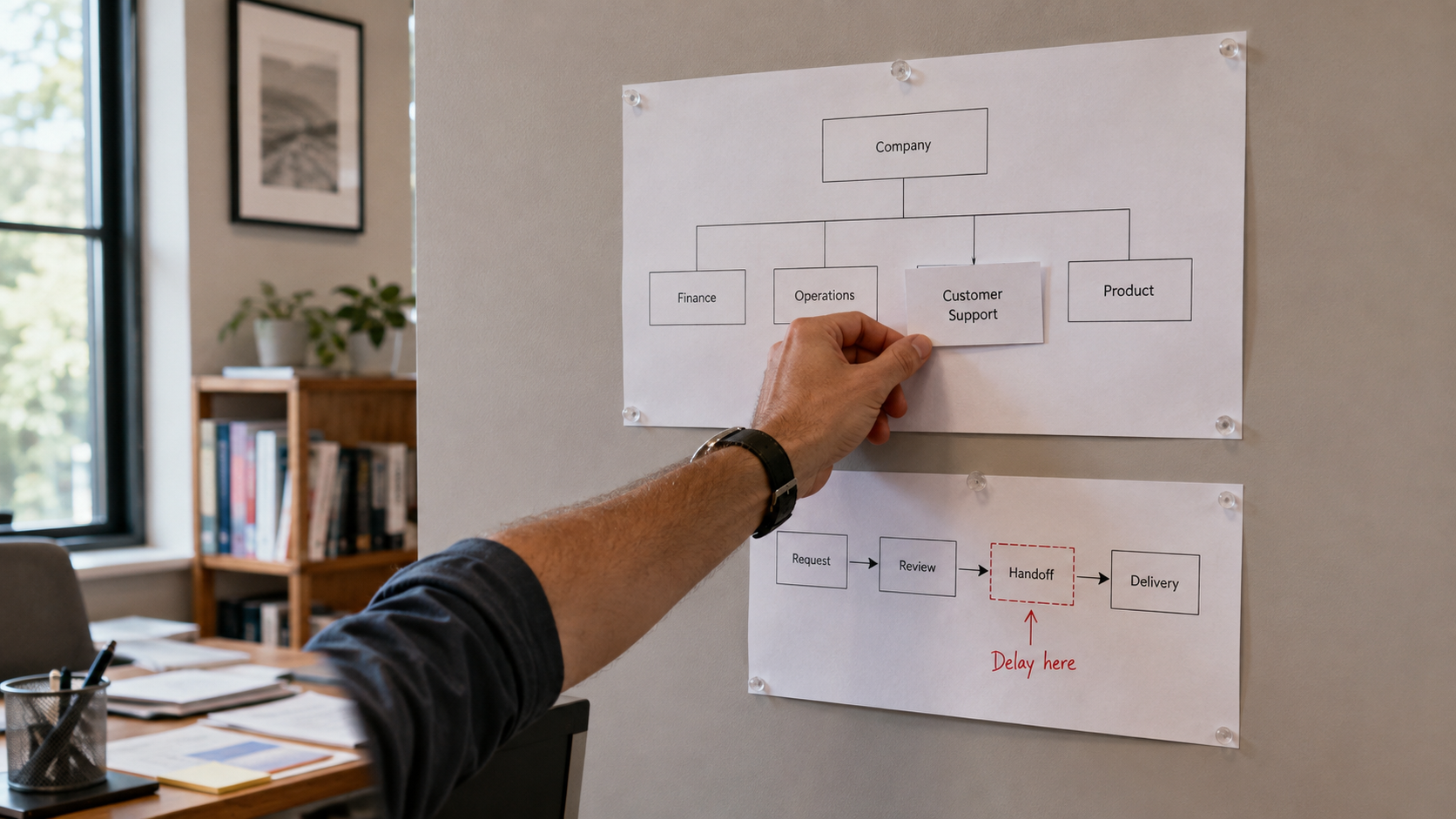
Why Reorganizations Often Fail Before They Begin
Many reorganizations begin with boxes and reporting lines before leaders have clarified the problem the new design must solve.

Your Org Chart Isn’t Your Organization
The real organization lives in decisions, relationships, workflows, and capabilities, not simply in the formal reporting structure.
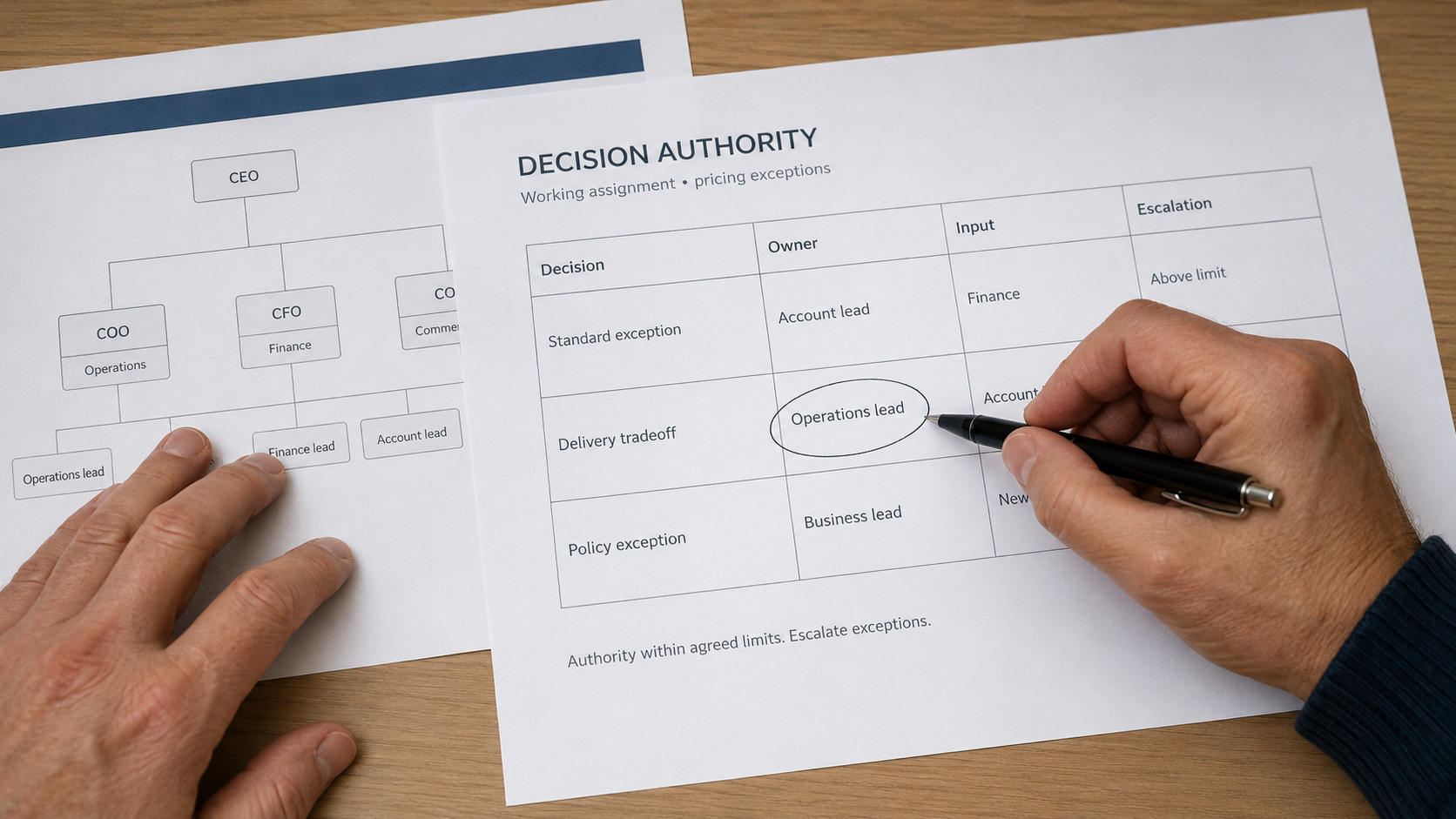
Decision Rights Are More Important Than Reporting Lines
Clear authority and escalation paths often improve execution more than another round of structural change.

The Myth of the Perfect Organizational Structure
No structure eliminates every tradeoff. Effective design makes the right tradeoffs explicit and manageable.

What Military Leadership Taught Me About Building Organizations
Clarity of mission, disciplined execution, and relentless development of people transfer directly to building extraordinary organizations.

The Difference Between Managing Performance and Building Capability
Performance management addresses today’s expectations. Capability building determines what the organization can deliver tomorrow.

Why High-Performing Teams Don't Depend on Hero Leaders
Durable performance comes from shared clarity, sound systems, and distributed leadership, not rescue by one exceptional individual.

Leadership Alignment Is More Valuable Than Leadership Development
Individual development creates limited value when leaders still work from conflicting priorities, assumptions, and definitions of success.

Why Accountability Problems Usually Aren’t Accountability Problems
What appears to be weak accountability often begins with unclear priorities, competing incentives, or ambiguous decision ownership.

Why Most Performance Management Systems Fail
Systems fail when they document performance more effectively than they enable the conversations and conditions that improve it.
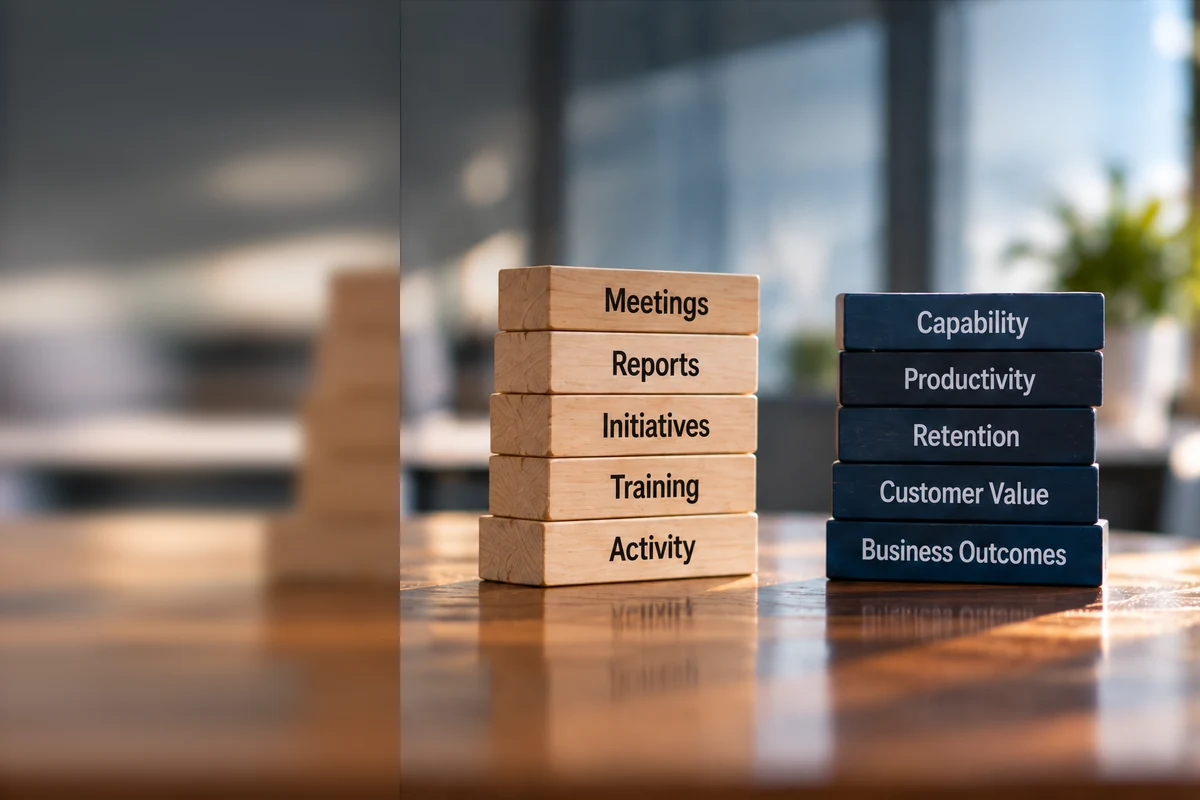
Measuring Activity vs. Measuring Organizational Performance
Activity metrics can create an illusion of progress. Leaders need measures that connect effort to organizational outcomes.

The Annual Review Isn’t the Problem
Replacing the review will not fix unclear expectations, weak feedback, or leaders who avoid meaningful performance conversations.

The Hidden Cost of Low Performers
The visible productivity gap is only the beginning. Unresolved performance issues can also consume managerial attention, shift team capacity, weaken trust in standards, and change how the organization performs.

The Real Purpose of Performance Conversations
The strongest conversations do more than evaluate the past; they create clarity, learning, capability, and commitment for what comes next.

The Performance Management Paradox
Why better performance management systems don't always produce better organizational performance.

Workforce Planning Isn’t Headcount Planning
Why strategic workforce planning begins with organizational capability, not employee counts.

Why Your People Data Isn’t Helping Leaders Make Better Decisions
The value of Workforce Intelligence is not better dashboards. It is better decisions.

The Metrics Every Executive Actually Needs
Executives need a focused view of capability, capacity, performance, and risk, not a catalog of every available HR measure.

Predicting Talent Risk Before It Happens
Leading indicators can surface capability and succession risks while leaders still have time to act.

Workforce Intelligence as a Competitive Advantage
Organizations gain an edge when workforce evidence informs strategy, investment, and operating decisions before competitors respond.

Strategic Workforce Planning Is Not an HR Exercise
When workforce planning lives only in HR, it stays tactical. In the business, it becomes a competitive weapon.

From HR Metrics to Workforce Intelligence
Headcount and turnover describe what happened. Workforce Intelligence helps leaders decide what the organization should do next.

Succession Planning Doesn’t Build Future Leaders
A list of successors is not a development system. Readiness requires deliberate experiences, accountability, and evidence.

Why Competency Models Fail
Competency models lose value when they become exhaustive descriptions rather than practical choices about capability and performance.

Stop Hiring for Today
Hiring only against current vacancies can deepen tomorrow’s capability gaps. Talent choices must account for future strategy.

Building Talent Systems Instead of Talent Programs
Programs come and go. A talent system connects attraction, development, deployment, succession, and performance around business needs.

The Strategic Difference Between Skills and Capability
Skills describe what people know. Organizational capability describes what the business can reliably accomplish with them.

The Skills-Based Organization: Hype or Horizon?
Skills-based models promise agility, yet many implementations stall. An honest assessment of what works and what it requires.

Culture Is an Outcome, Not an Initiative
Culture reflects the systems, signals, and leadership choices people experience every day, not a standalone change program.

Why Engagement Surveys Rarely Improve Engagement
Measurement alone cannot improve experience. Progress depends on whether leaders understand causes and act visibly on what they learn.

Employee Experience Begins Long Before Day One
Role design, leadership expectations, and organizational reputation shape the employment experience before onboarding starts.

The Cost of Organizational Friction
Small barriers in decisions, tools, and coordination compound into lost capacity, weaker experience, and slower execution.

Retention Starts With Organizational Design
People often leave conditions created by unclear roles, poor workflows, and weak management systems, not the organization’s messaging.

Why Your Engagement Survey May Arrive Too Late.
Annual surveys are lagging indicators. Real listening systems connect evidence to timely action while problems are still forming.

AI Won’t Replace Your HR Function. But It Will Expose It.
AI will reveal whether HR has a clear talent strategy, sound data foundations, and leaders capable of exercising judgment.

The Future CHRO Will Look More Like a Systems Architect
The next generation of CHROs will connect technology, talent, structure, data, and operating choices into a coherent system.

AI Makes Better Analysis Available, Not Better Decisions
Faster analysis expands the evidence available to leaders; it does not replace context, tradeoffs, or accountable judgment.

AI Isn’t the Competitive Advantage. Judgment Is.
Technology becomes differentiating only when leaders can interpret evidence, challenge assumptions, and make better choices with it.

Why Organizational Intelligence Is Becoming a Competitive Advantage
The advantage belongs to organizations that connect market, workforce, and performance evidence faster than competitors can.

Why Transformations Fail in the Middle
Most transformations fail after launch, when energy fades and resistance hardens. Sustaining momentum requires a different kind of leadership.
A Better Question Can Reveal Where Change Should Begin.
If an insight has surfaced a challenge within your organization, TQG can help you understand what is driving it, identify the connected considerations, and determine where focused action can create the greatest value.
Begin the Conversation